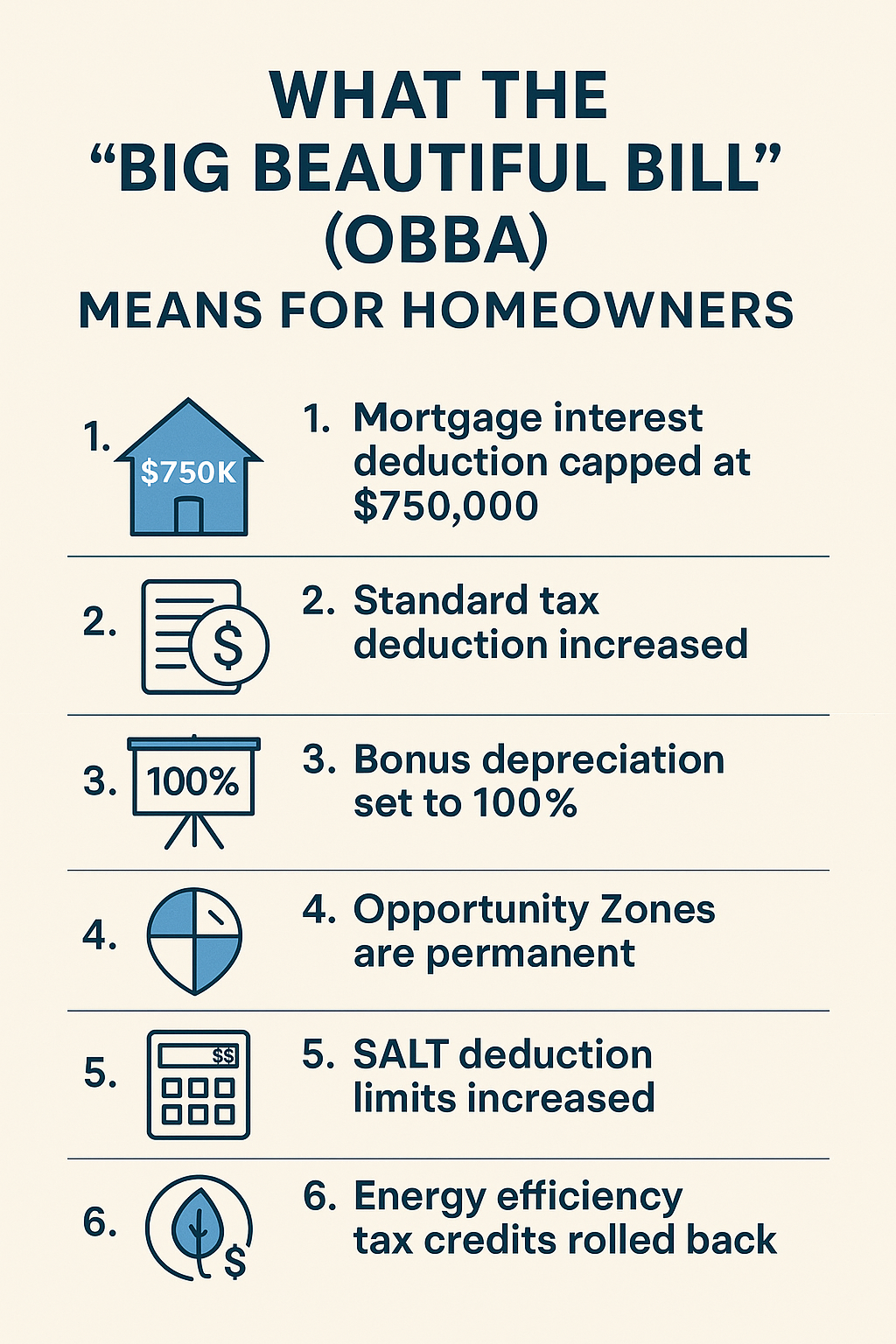
A sweeping new piece of legislation—nicknamed the “Big Beautiful Bill” (OBBA)—has introduced several permanent changes to the U.S. tax code that impact homeowners, real estate investors, and property developers. Here’s a breakdown of what you need to know:
1. Mortgage Interest Deduction Capped at $750,000
What it means:
Buyers can now only deduct interest on the first $750,000 of mortgage debt. This cap is now permanent.
While this may not affect average buyers, those purchasing in high-cost markets could see reduced tax benefits.
2. Standard Tax Deduction Increased
The standard deduction has been increased to $15,750 for single filers and $31,500 for joint filers.
What it means:
This may simplify filing for many Americans and reduce the need to itemize deductions. However, it could also diminish the value of commonly itemized deductions like mortgage interest or property taxes.
3. Bonus Depreciation Set to 100%
What it means:
Real estate investors and developers can now write off 100% of qualifying property or equipment purchases in the first year—rather than depreciating them over time. This boosts early cash flow and may encourage more upfront investment in improvements or expansions.
4. Opportunity Zones Are Now Permanent
What it means:
Investments in designated Opportunity Zones now offer long-term tax advantages, such as deferral or elimination of capital gains. This could spur further development and attract investors to these underutilized areas.
5. State and Local Tax (SALT) Deduction Limits Increased
SALT deductions are now capped at $20,000 for single filers and $40,000 for joint filers—up from the previous $10,000 cap. These limits apply through 2030.
What it means:
Homeowners in high-tax states like New Jersey, New York, California, and Illinois will benefit most. However:
- To qualify for the full $40K deduction, joint filers must earn $500,000 or less (MAGI).
- Partial relief is available for incomes between $500,000–$600,000.
- Incomes above $600,000 will still be capped at $10K.
6. Energy Efficiency Tax Credits Will Be Rolled Back
What it means:
Federal tax breaks for upgrades like solar panels, energy-efficient windows, and HVAC systems are set to expire by the end of 2025. This could reduce incentives for buyers looking to make eco-friendly upgrades and may also impact seller value-add strategies.
Final Thoughts
The OBBA represents a mix of incentives and limits for homeowners, investors, and developers. Whether you’re buying, selling, or investing, it’s important to understand how these changes affect your bottom line.
Important: As your real estate broker, we’re here to keep you informed—but this article is for general informational purposes only and should not be considered financial, tax, or legal advice. Please consult your own professional advisors to understand how these changes may apply to your individual situation.