New Construction in South Jersey: Are We Overbuilding? Let’s Check the Facts.
If you’ve been driving around Mount Laurel or Mullica Hill lately, you might feel like new construction signs are popping up everywhere. You’re not wrong. Builders have been busy throughout South Jersey. This has left many local buyers asking: Are we overbuilding like we did before the 2008 housing crash?
Despite what you might hear on the news, there’s no need for alarm. The data shows builders aren’t racing ahead. They’re actually tapping the brakes in our region.
South Jersey Builders Are Pulling Back
Building permits tell us what’s next in home construction. These are applications to start building new homes. Right now in our area, building permits are trending down, not up. This matters a lot for our local market.
Before the housing crash of 2008, builders ramped up single-family home production too quickly. This is shown by the red arrow in the graph below. They built far more homes than buyers needed. That oversupply led to falling prices. Many people remember this and worry about history repeating itself.
But today’s market is different. Construction has picked up since 2012, but we’re not heading for the same mistakes. The latest data shows builders are starting fewer homes right now. This is shown by the green arrow in the graph below:
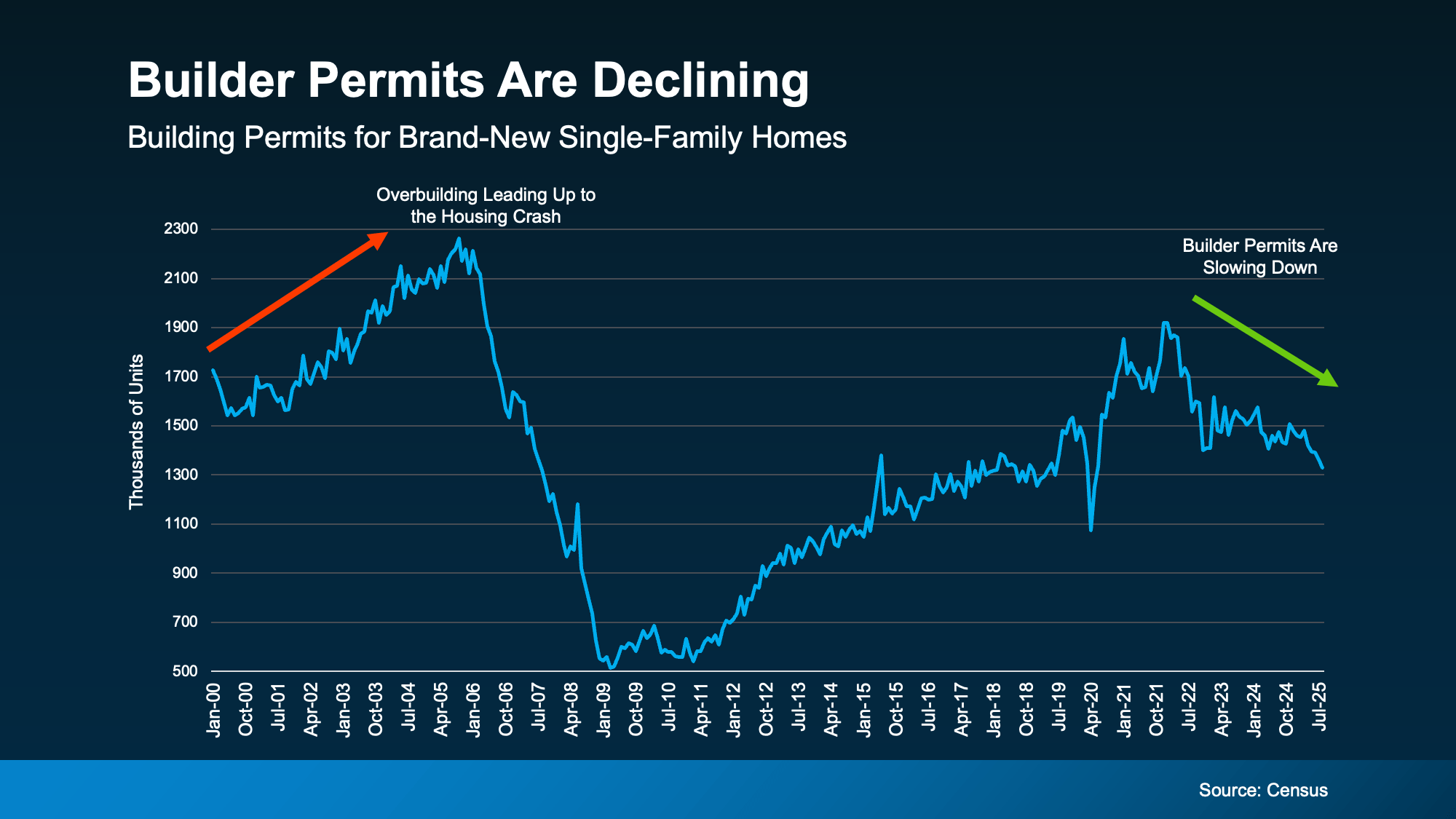 The National Association of Home Builders (NAHB) confirms this trend. Their data shows single-family building permits have fallen for eight straight months. We’re seeing this play out in developments across Woolwich and Pitman too.
This Slowdown Is Strategic, Not Random
Builders in South Jersey are watching our local economy and buyer demand closely. They’re adjusting in real time. Many are slowing their pipelines to avoid getting stuck with too much unsold inventory. This is exactly what we’re seeing in a few communities, like Hidden Mill Estate in Blackwood.
Ali Wolf, Chief Economist at Zonda, says:
“. . . builders are still working through their backlog of inventory but are more cautious with new starts.”
This is very different from what happened before the housing crash. Back then, overconfidence led to record levels of new construction even as demand dropped. Today’s builders are more cautious. They listen to market signals and adjust before things get out of balance.
South Jersey Follows the National Trend
While inventory varies based on where you live in our region, the overall pattern holds true. The graph below shows the trend across different parts of the country:
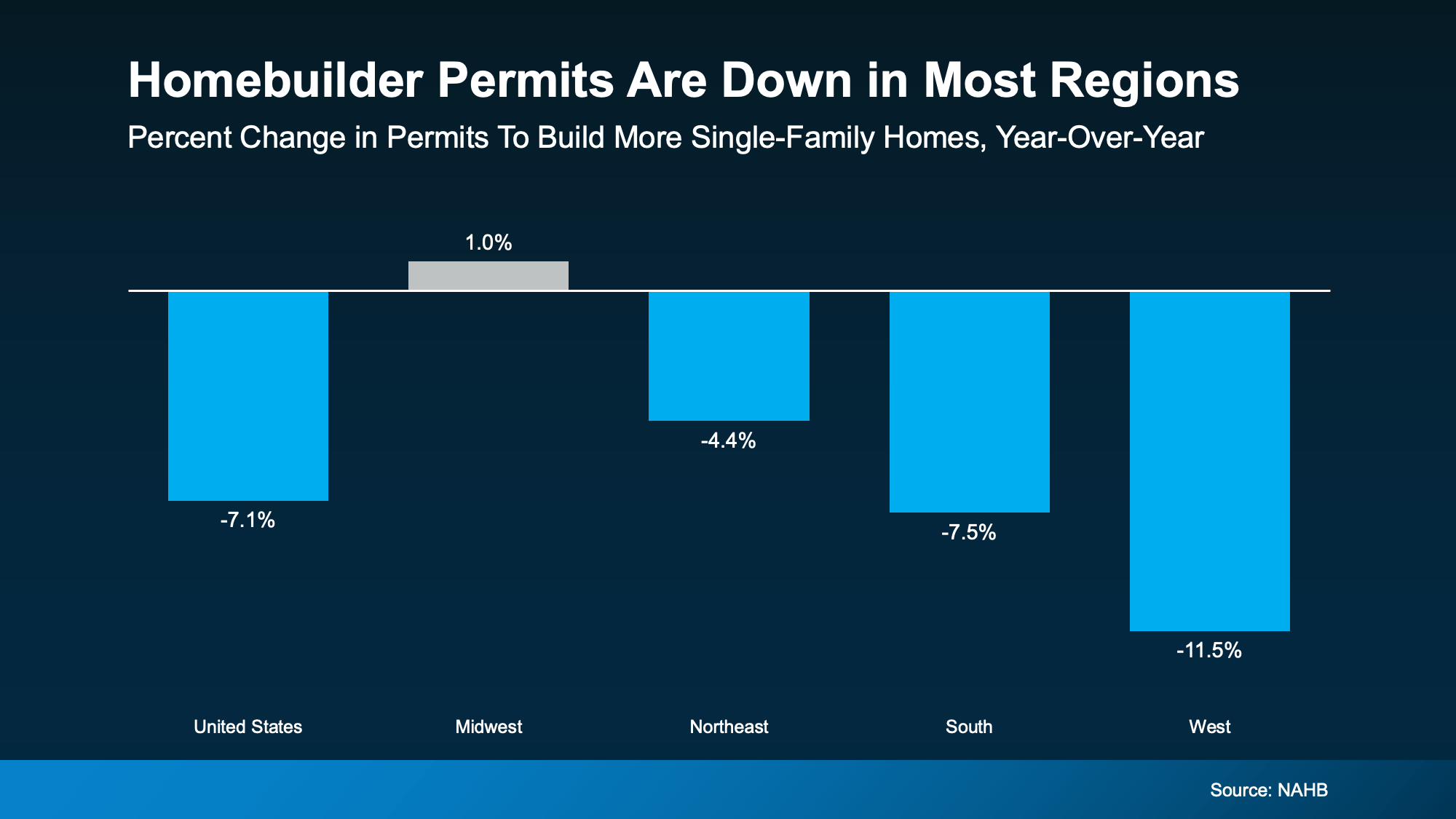 NAHB reports that single-family permits are down in almost every region. Only one area shows a slight increase, and even there, the growth is minimal. This matches what we see across Burlington, Gloucester, and Camden counties.
Why South Jersey Won’t Repeat 2008
Before the crash, builders kept building long after demand disappeared. This time, they’re slowing down early. That’s good news for our local market stability.
South Jersey actually needs more homes after years of underbuilding. But developers are being careful not to overdo it. They’re taking a measured approach to how many homes they build right now.
You will see more new homes for sale in towns like Woolwich and Sicklerville today. This doesn’t mean we’re oversupplied. It means buyers finally have more options. Builders are setting a sustainable pace to keep the market healthy. They won’t flood South Jersey with excess inventory. This benefits everyone in our housing market.
Bottom Line
Seeing more new construction around Williamstown, and even more mature towns like Runnemede, doesn’t mean builders are going overboard. With building permits declining for eight straight months, this isn’t an uncontrolled boom. It’s a careful, measured recovery that supports South Jersey’s stable market.
Want to know more about new construction options in your specific town? Let’s talk about what builders are doing in your neighborhood.