By Mike Lentz | The Mike Lentz Team - Keller Williams Realty
Most sales still close. Nationally, only 10-15% of contracts hit this snag. If a buyer backs out, you can usually relist and sell to the next buyer. Sellers in South Jersey can lower the risk with a pre-listing inspection, a close look at the buyer’s financing, and clear contingency terms.
Getting an offer on your house is exciting. You are one step closer to your next move. But a buyer who backs out or goes silent before closing is a real worry for many sellers.
If you have seen headlines about more sales falling through, that worry is understandable. According to Redfin and Cotality, canceled contracts have been rising nationally.
Most sales still go through. Nationally, only 10-15% hit this snag. Sellers in Camden, Burlington, Gloucester, Salem, and Cumberland counties can take steps to stay out of that group.
It starts with knowing what tends to scare buyers away. Then you deal with those issues before they derail your move.
What’s behind the rise in canceled contracts?
Buyers are more cautious. Mortgage rates are stretching budgets. With more homes to choose from, buyers can walk away if something feels wrong. As Redfin explains:
“That gives house hunters more options and makes them more likely to walk away if an inspection uncovers problems, an appraisal comes in low or the seller doesn’t agree to concessions.”
An accepted offer is not a guaranteed sale. That is no reason to stay off the market. It does mean that spotting problems early matters more than ever.
What happens if a buyer backs out: the three common causes
A national Redfin survey asked real estate agents why buyers back out. Their answers show what can go sideways and how to prepare (see graph below):
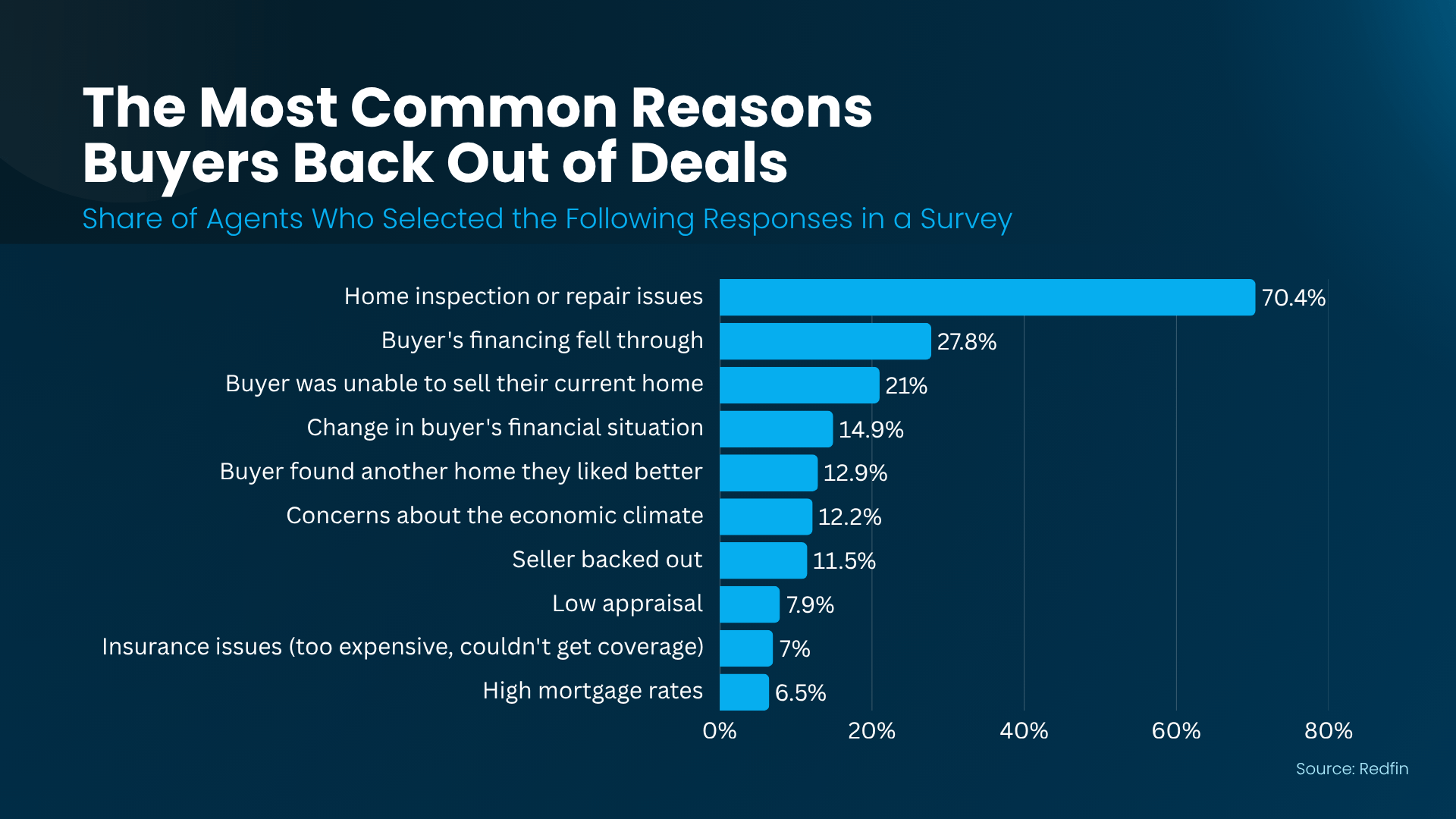
1. Inspection or repair issues (70.4%)
This is the biggest cause. It is also where sellers have the most control.
Start with a pre-listing inspection before your house goes on the market. If something needs attention, you have three choices. Fix it before you sell. Adjust your asking price. Or disclose it and go into negotiations prepared. Finding a problem yourself is far better than letting a buyer’s inspector find it first.
2. Buyer financing falls through (27.8%)
Even pre-approved buyers can hit financing problems before closing. With mortgage rates adding pressure to affordability, some buyers struggle to make the numbers work.
You cannot control whether a buyer’s loan is approved. You can look closely at their financing with your agent before you accept an offer. If affordability is the concern, your agent can help you weigh incentives like closing cost credits or a mortgage-rate buydown.
3. The buyer can’t sell their current home (21%)
Some buyers need to sell their house before they can buy yours. If their sale falls through, yours can be affected too.
Read any home-sale contingency closely before you accept the offer. Your agent can check where the buyer is in their own sale and which protections to ask for. Our guide to selling and buying at the same time explains how these contingencies work.
You cannot remove every risk. You can plan for the ones you can see.
What happens if a buyer backs out and you relist
Headlines about canceled deals do not give the full picture. Most home sales still make it to closing.
A sale that falls through does not mean your house won’t sell. Sometimes a buyer’s circumstances change. Sometimes the issue that ended the first contract can be fixed before the next offer.
You want an agent who spots problems early, handles negotiations, and keeps the sale moving. You cannot control every twist, but you can control how prepared you are.
Bottom line
Fear of a buyer backing out should not hold you back. No sale comes with guarantees. A little preparation up front makes the process smoother, and it gives you a plan for what happens if a buyer backs out.
If you are ready to make a move, schedule a quick call and we’ll walk through whether a pre-listing inspection makes sense for you.
For the full picture in your county, see our county market reports for Camden, Burlington, Gloucester, Salem, and Cumberland counties.