Why Rising Foreclosure Headlines Aren’t a Red Flag for South Jersey’s Housing Market
Have you seen headlines claiming foreclosure activity has climbed for 10 straight months? It’s easy to get concerned about what this means for our local market. But looking at the complete picture reveals some simple truths about South Jersey real estate:
- Current foreclosure numbers align with normal market patterns
- High home equity protects most South Jersey homeowners
- No data suggests a wave of distressed sales will crash our local market
Foreclosure Filings Up 32%, But South Jersey’s Market Remains Stable
The real worry behind these headlines is whether we’re heading toward another 2008 situation. Back then, risky lending and too many homes for sale drove prices down. This led to a major spike in foreclosures throughout the region. Many homeowners felt the impact deeply.
Today’s situation looks very different in towns like Atco and Audubon. Yes, ATTOM data shows foreclosure filings up 32% year-over-year. That increase sounds dramatic at first glance. But context matters, and it doesn’t signal another crash.
The numbers tell the real story. Look at where we were during the last crash (the red in the graph below). Then compare to where we are now (the blue):
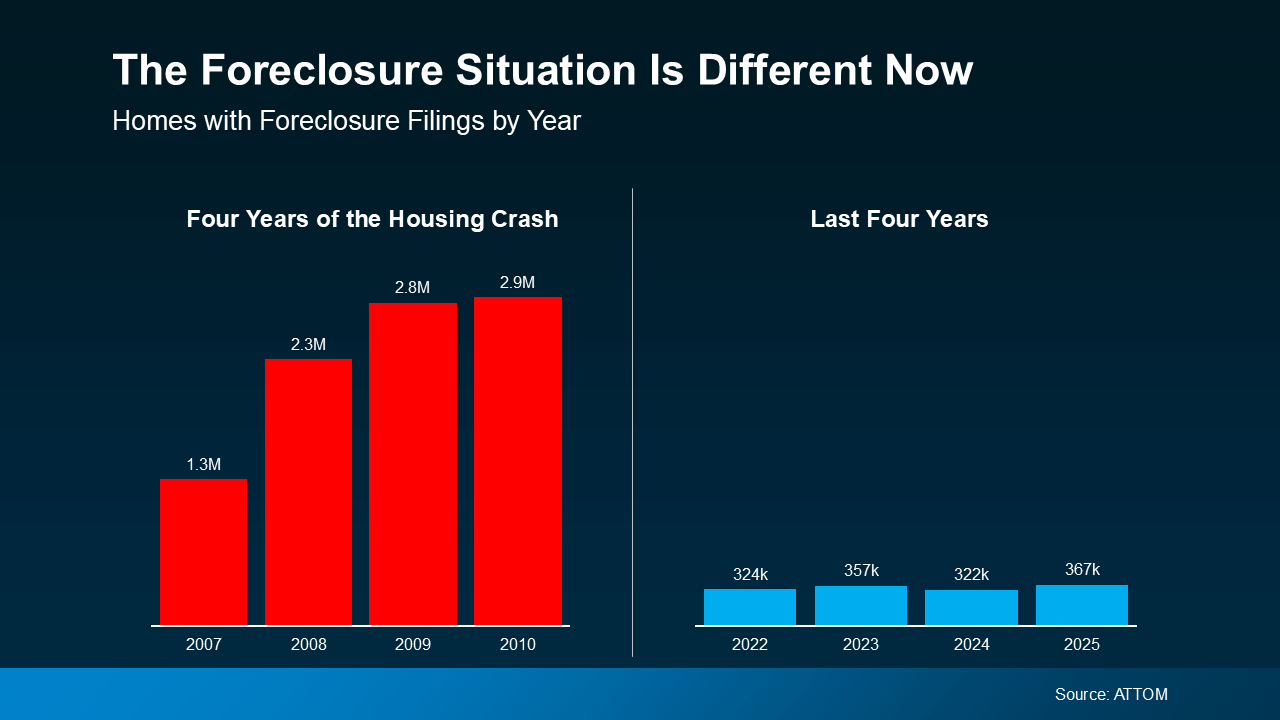 Even with recent increases, we remain nowhere near crash levels. This isn’t a return to crisis conditions. It’s simply a return to normal market patterns.
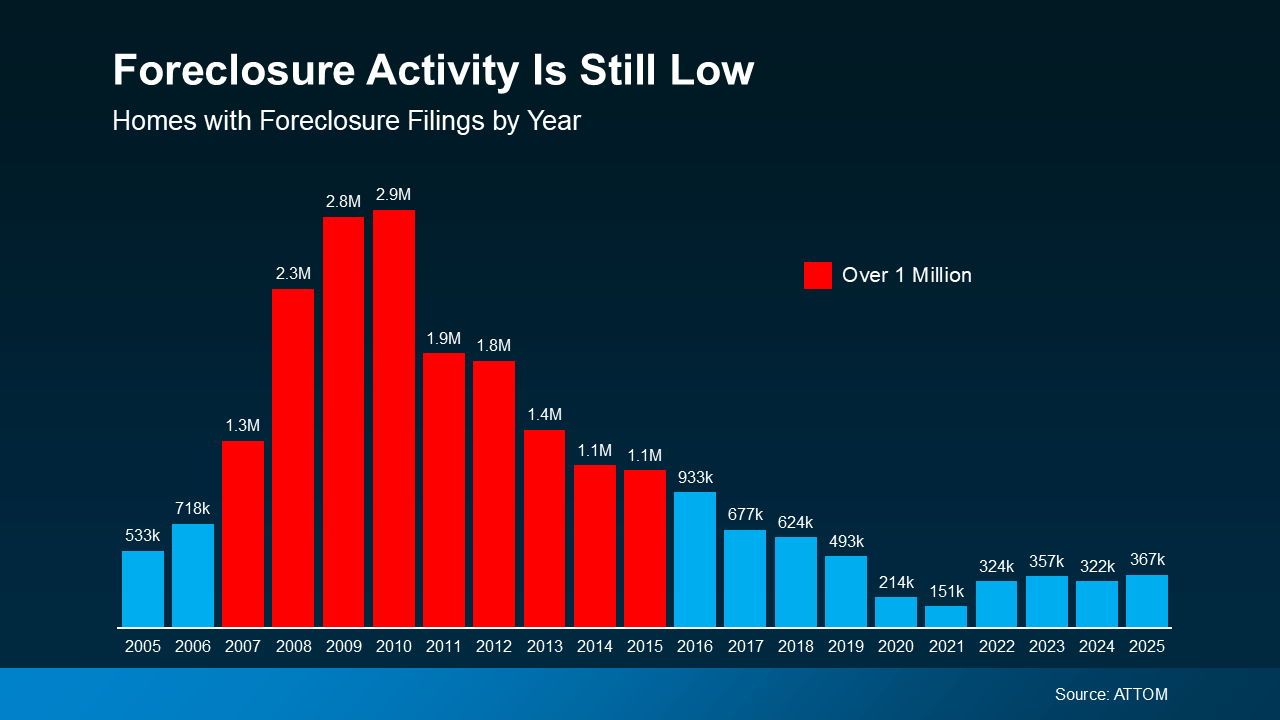
The graph below tracks foreclosure filings back to early 2005. The lead-up to and aftermath of the crash appears in red. Those years saw foreclosure filings exceed 1 million annually.
Now check the right side and look at the 2017-2019 range – the last truly normal years for housing. You’ll notice we’re actually just returning to typical market levels, even with recent increases:
 Rob Barber, CEO at ATTOM, explains the situation clearly:
“Foreclosure activity increased in 2025, reflecting a continued normalization of the housing market following several years of historically low levels . . . While filings, starts, and repossessions all rose compared to 2024, foreclosure activity remains well below pre-pandemic norms and a fraction of what we saw during the last housing crisis . . . today’s uptick is being driven more by market recalibration than widespread homeowner distress, with strong equity positions and more disciplined lending continuing to limit risk.”
The word “normalization” deserves special attention here. While economic pressures affect some homeowners, we’re not seeing a flood of distressed properties in Gibbsboro or Winslow. Despite what alarming headlines suggest, this isn’t a large-scale crisis.
Today’s increase signals a return to normal patterns, not market trouble.
Why South Jersey Won’t Repeat 2008’s Housing Crisis
The 2008 crash still shapes how people interpret today’s news. But South Jersey’s current market operates under very different conditions:
- Lending standards have tightened significantly
- Today’s borrowers meet higher qualification requirements
- South Jersey homeowners have built substantial equity
The equity factor proves especially important. Home prices across our region have risen steadily over five years. For many homeowners, from Mickleton to Medford Lakes, their houses now worth far more than they paid. This creates a strong financial buffer during challenging times.
When homeowners face hardship today, they usually have options. They can sell and potentially walk away with money in their pocket instead of facing foreclosure. This marks a major contrast to 2008 when many local homeowners owed more than their homes were worth.
For more on this topic, check out our guide on whether it’s a buyer’s or seller’s market.
Bottom Line
Foreclosure activity may be rising, but it remains well within normal ranges across South Jersey – nowhere near previous danger zones. Unfortunately, headlines often create fear rather than clarity. This highlights why having a trusted local real estate expert matters so much.
When you see concerning real estate news or social media posts about the housing market, reach out to us. We’ll help you understand what’s actually happening and how it might affect your specific situation in South Jersey.