By Mike Lentz | The Mike Lentz Team – Keller Williams Realty
Rising inflation typically keeps mortgage rates elevated because the Federal Reserve maintains higher interest rates to cool spending. When inflation spikes, often due to energy prices or geopolitical events, the Fed delays rate cuts, which means mortgage rates stay higher for longer. For buyers, that puts the emphasis on strategy more than perfect timing.
Recent data shows inflation and mortgage rates are moving in the wrong direction together. But before the headlines send anyone into a panic, here’s what’s actually going on, why it matters for housing, and what it means if you’re thinking about buying or selling in Camden, Burlington, Gloucester, Salem, or Cumberland counties.
How Inflation and Mortgage Rates Went Up: What That Actually Means
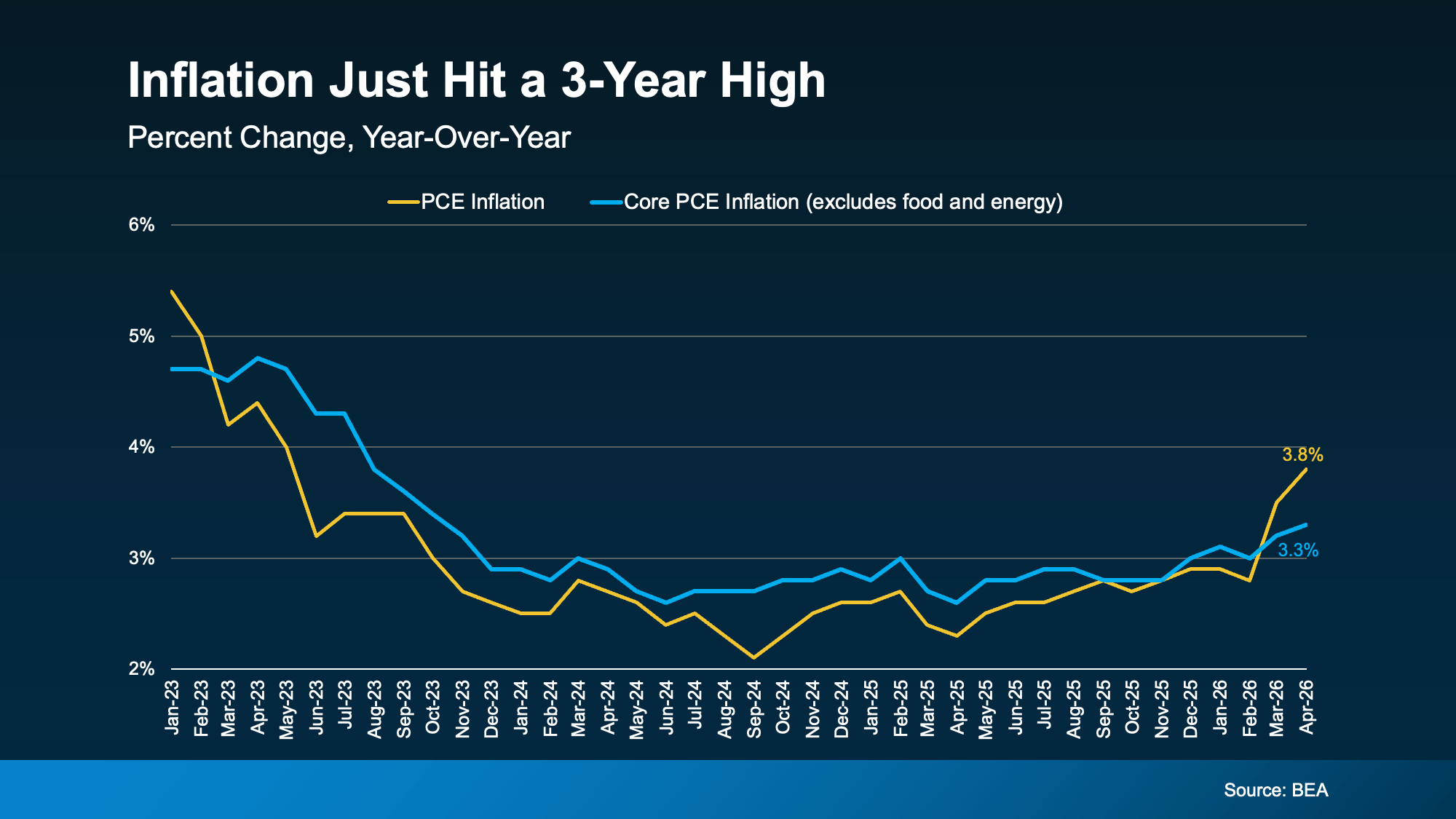
The government tracks inflation in several ways. One measure is called PCE, the Personal Consumption Expenditures Price Index. It measures how much more people are paying for goods and services compared to a year ago. Based on your own expenses, you can probably guess which way that’s trending.
That’s the number everyone is talking about right now. Check out the yellow line to see how that’s spiked since February. A big driver of this jump is ongoing conflict in the Middle East, which has pushed gas and energy prices significantly higher.
Now, you may have noticed there’s a second line. The blue line shows core PCE. That’s the same measure, but with gas and energy prices stripped out. The Federal Reserve (the Fed) actually watches this number most closely because energy prices swing around a lot and can be misleading.
And here’s the somewhat encouraging part.
Core PCE is rising, but not nearly as fast as the overall number. That suggests a good chunk of the inflation spike we’re seeing right now is tied directly to what’s happening overseas. So when that situation settles down, inflation may settle a bit too.
Why Inflation and Mortgage Rates Move Together
Here’s the housing connection. When inflation is high, the Fed tends to keep the Federal Funds Rate elevated or even raise it to try to taper spending and cool inflation back down. And while it’s not a one-for-one relationship, that Federal Funds Rate can have an impact on your mortgage rate when you buy.
Right now, based on the information we have, there’s roughly a 50/50 chance the Fed actually raises the Federal Funds Rate before the end of 2026, according to CME FedWatch.
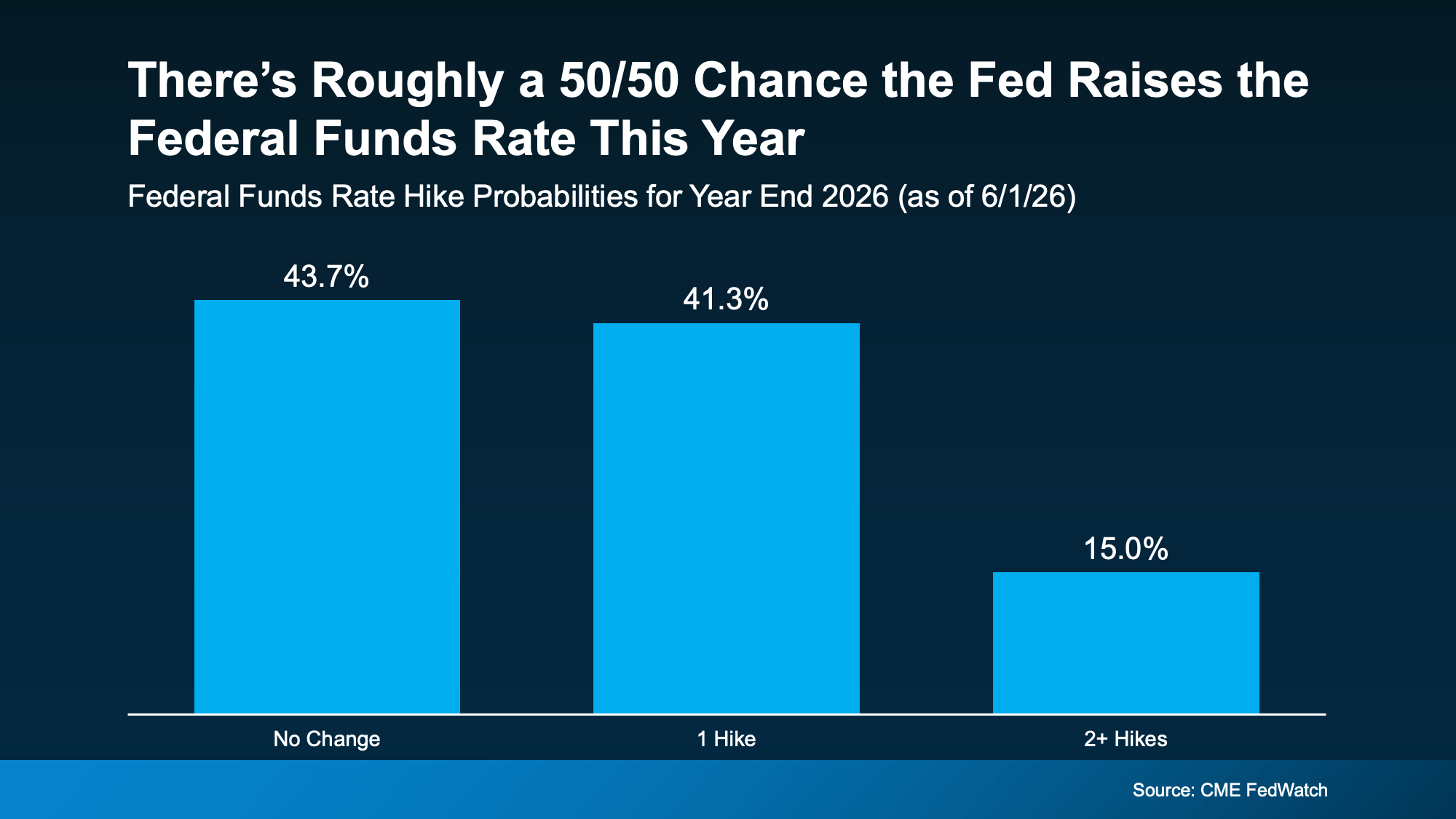
While it’s too soon to say where this goes for certain and if we’re headed for a rate hike, it does mean mortgage rates are probably not coming down as soon as most people were hoping.
If you’ve been waiting for rates to drop significantly before making a move, this report is a reminder that “higher for longer” is still very much on the table. It really all depends on where the economy goes from here. According to Bankrate:
“Oil prices and bond yields have dropped a bit . . . but they’re still way up compared to the start of spring. Until there’s a resolution to the war, look for both inflation and mortgage rates to stay high.“
This Is Not 2008: Not Even Close
Just remember, a tough economy does not equal a housing crash. The conditions today are very different from what led to the 2008 collapse. Here’s why:
- Inventory is still relatively low. There’s no flood of homes hitting the market.
- Most homeowners today have strong equity in their homes.
- Lending standards are far stricter than they were before 2008.
- Today’s challenge is affordability, not a wave of distressed underwater sellers.
The market feels hard across South Jersey right now, and that pressure is real. The fundamentals above are not the ones that produce a crash.
How Inflation and Mortgage Rates Impact Buyers: You Still Have Real Options
Even at today’s rates, there are real strategies that can help, depending on your situation:
- Ask your lender about different loan options. Adjustable-rate mortgages (ARMs) or rate buydowns may help lower your monthly payment in the short term.
- Explore first-time buyer programs, down payment assistance, or seller concessions that could help offset costs.
- Stay in close touch with a trusted agent and lender. When rates shift, and they will, you’ll want to be ready to move fast.
The right strategy for your goals matters more than waiting for rates to hit a number you’ve picked. If you’re curious about current market conditions or want to understand your real buying power, that’s exactly the kind of conversation we have with buyers every day.
Bottom Line
Inflation is still above where the Fed wants it, and that means inflation and mortgage rates will likely stay elevated for a while. But for people who need to move, strategy matters far more than trying to perfectly time the market.
If you want to talk through what this means for your situation, schedule a quick call and we’ll walk through it together.
For the full picture in your county, see our latest recaps for Camden, Burlington, Gloucester, Salem, and Cumberland counties.