By Mike Lentz | The Mike Lentz Team - Keller Williams Realty
A starter home with less than 20% down can cut years off your path to homeownership in South Jersey. It takes about 7 years to save for and break even, versus nearly 15 for a mid-priced home with 20% down. Most first-time buyers put down about 10%. FHA needs 3.5%, and VA and USDA loans allow 0% for eligible buyers.
Owning a home can feel years away for a lot of first-time buyers. Saving for a down payment takes time, and each year you spend renting can make owning feel further off. But a smart starter home strategy can change that timeline significantly.
Buying your first home doesn’t have to feel like a distant goal. Two choices you control can bring your first home years closer, even with affordability as tight as it is right now.
How Long Buying Really Takes
First, one quick definition. Breaking even is the point where owning has cost you about the same as renting would have over the same period. After that point, owning starts to cost less than renting. Kara Ng, Senior Economist at Zillow, puts it this way:
“Buyers should think about not just when they can afford to buy, but how long they’d need to stay before owning makes more financial sense than renting.”
So how long does reaching that point usually take? Let’s do the math.
According to Zillow, it usually takes about 8.5 years to save for a 20% down payment. Then roughly 6.2 more years before owning costs the same as renting. Together, that’s just under 15 years.
But that math relies on two assumptions. You’re buying a mid-priced home, and you’re putting 20% down.
Change either one and your timeline gets shorter. Change both and it can shrink fast. It also varies by market, since local prices and rents are different depending on where you live.
A Starter Home Strategy Can Get You There Twice as Fast
A starter home usually means a home in the lower third of local prices. They’re often condos, townhomes, or single-family homes a little smaller or older than others in the area.
Choosing one over a mid-priced home can cut your wait down by a lot. You may not realize just how much it shortens your timeline. Because if you’re buying a more affordable home, you don’t have to save up as much or as long.
Zillow found that nationwide, a starter home takes half the time to save for and come out ahead on. About 7.2 years total, compared with renting:
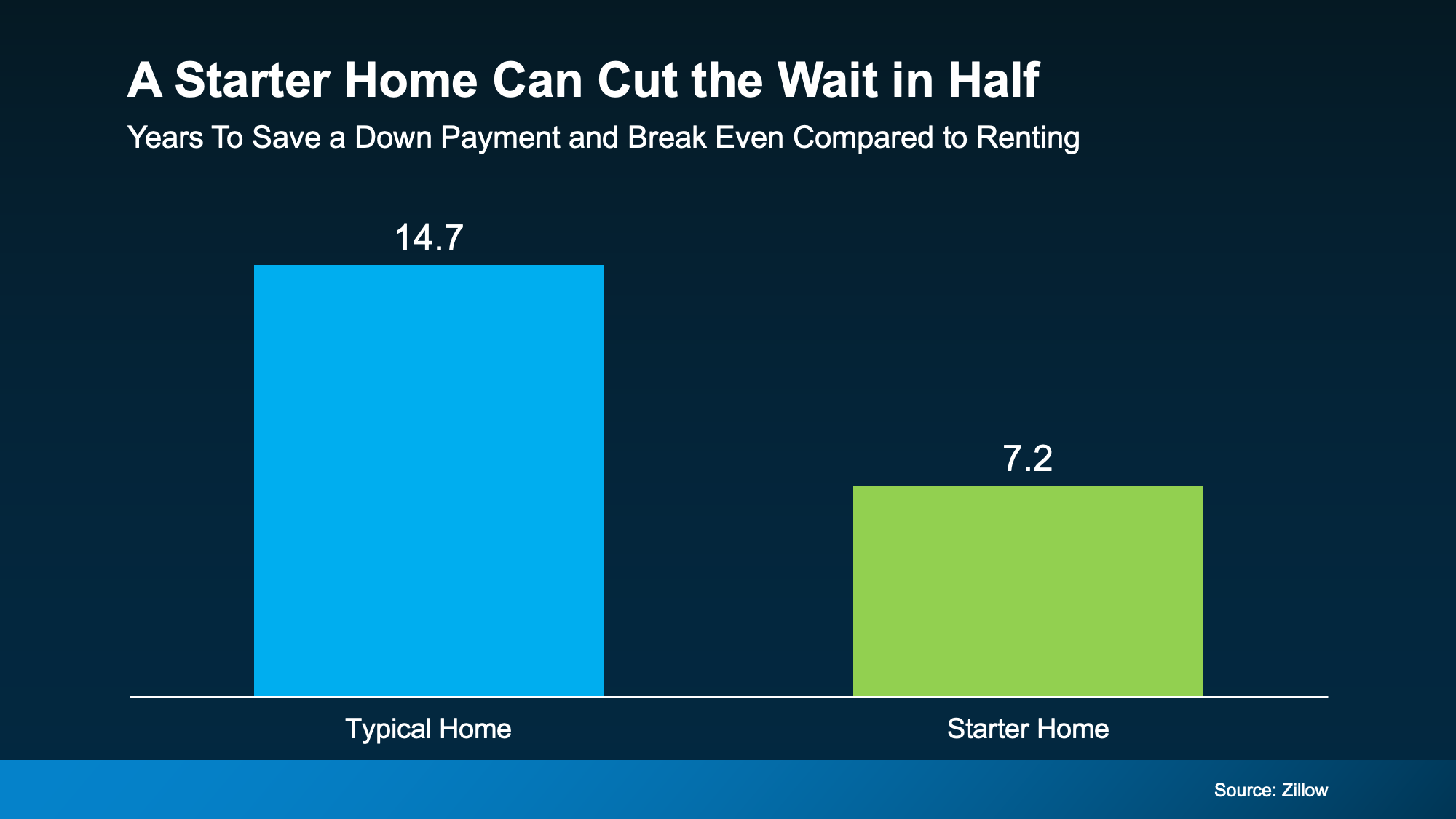
That works out to about 4.6 years to save and 2.6 years to break even. It won’t erase every affordability challenge, but it can take years off the wait. And if you’ve already been saving for a while, it could get you closer to making it a reality.
How This Starter Home Strategy Works in Local Markets
Here in Camden, Burlington, Gloucester, Salem, and Cumberland counties, the starter home market includes townhomes, condos, and smaller single-family homes. These properties typically fall in the lower price tier for the area.
The timeline still depends on local prices and how fast you can save. But the principle holds. A lower price point means less time saving, less time to break even, and years closer to ownership.
You Usually Don’t Need To Put 20% Down
You, like many first-time homebuyers, might assume you need a 20% down payment to even consider buying. But a lot of the time, you don’t.
Most first-time buyers don’t put down anywhere near that. The National Association of Realtors shows the median down payment for first-time buyers is 10%:
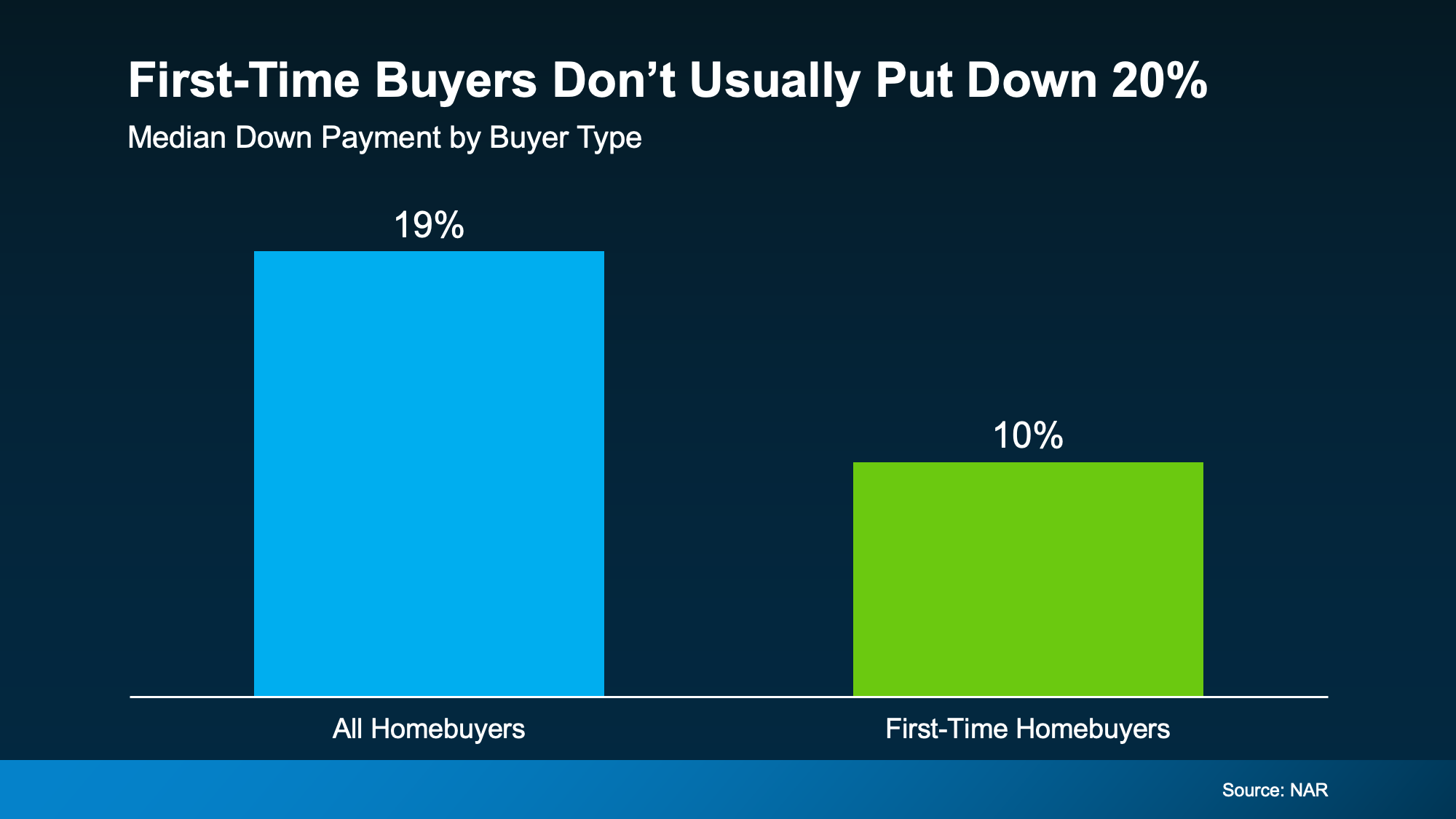
And the minimums go lower still. Some buyers put down as little as 3% on a conventional loan or 3.5% on an FHA loan. Eligible veterans (VA loans) and buyers in eligible rural areas (USDA loans) can put down nothing at all.
Down Payment Assistance Programs
There’s help with the upfront costs of buying, too. Down Payment Resource counts 2,746 assistance programs nationwide, and some are even stackable:
“Some homebuyers can layer multiple sources of assistance to reduce their upfront costs. Layering means combining more than one eligible source of funding as part of your home purchase.”
Put those together and the numbers start to come down. A lower price point, a smaller down payment, and help covering it. The years you thought you needed start to shrink.
What This Means for Your Timeline
Your first home may not be as far off as it feels. When the numbers make sense for you, buying a starter home and putting down less than 20% can get you there years sooner.
The math is straightforward. Save less upfront, break even faster, start building equity sooner. That’s the case for a starter home strategy.
Want to see which starter homes in our area could fit your budget? Let’s connect. We’ll walk through what makes sense for your timeline and your goals.
If you want to talk through what this means for your situation, schedule a quick call and we’ll walk through it together.
For the full picture in your county, see our county market reports for Camden, Burlington, Gloucester, Salem, and Cumberland counties.