By Mike Lentz | The Mike Lentz Team - Keller Williams Realty
No. The Fed influences mortgage rates, but it doesn’t control them. When the Fed raises its Federal Funds Rate to fight inflation, it can push mortgage rates higher in the short term. But mortgage rates actually track the 10-year Treasury yield, which moves based on investor expectations about inflation and the economy. For South Jersey buyers and sellers, this means the Fed’s decisions matter, but they’re only one piece of what drives your borrowing costs.
You’ve heard the headlines. The Federal Reserve raised rates again. And if you’re planning to buy or sell a house in South Jersey, you’re probably wondering what that means for your next move.
With all the coverage, it’s easy to assume the Fed sets mortgage rates directly. That’s one of the most common myths in real estate. The reality is more nuanced. The Fed’s decisions can influence rates, but they don’t control them. Understanding the difference matters when you’re making decisions about timing, pricing, or how much house you can afford.
The next few months could feel bumpy. The Fed is playing the long game to bring inflation down. But with the right plan, you can still make a move that works at today’s rates. Here’s what you need to know.
Why the Fed Is Raising Rates
It all comes back to inflation. When prices rise across the board, everything gets more expensive. Buyers have less purchasing power. Homes cost more to build. Monthly payments stretch budgets thinner.
So the Fed raises its key short-term rate, called the Federal Funds Rate. The goal is to slow the economy just enough to cool inflation without triggering a recession. It’s a delicate balance, and this is where a lot of people get tripped up.
MYTH: The Fed controls mortgage rates.
REALITY: The Fed influences mortgage rates, but it’s only one piece of the puzzle.
As NerdWallet explains:
“The Federal Reserve influences mortgage rates, but doesn’t set them. Mortgage rates are influenced by many elements, including the inflation rate, the pace of job creation, and whether the economy is growing or shrinking. The Federal Reserve’s monetary policy is a factor, too.”
Here’s the simplest way to understand how it works. Mortgage rates tend to follow the 10-year Treasury yield. That’s the return investors earn when they lend money to the government for 10 years. The yield moves up and down based on what investors expect from inflation and the broader economy.
Right now, one of the biggest drivers of that yield is the conflict in Iran. It has pushed oil prices higher, which makes investors worry about inflation. Any news about the conflict can move mortgage rates. If there’s resolution, that could take pressure off both inflation and mortgage rates. But the timing is impossible to predict.
What the Fed does can also move the 10-year yield. When they hike the Federal Funds Rate to fight inflation, investors pay attention. That can push the yield up, and mortgage rates usually follow. But once inflation cools, the yield has room to drop. Mortgage rates can come down, too. That gives buyers some purchasing power back.
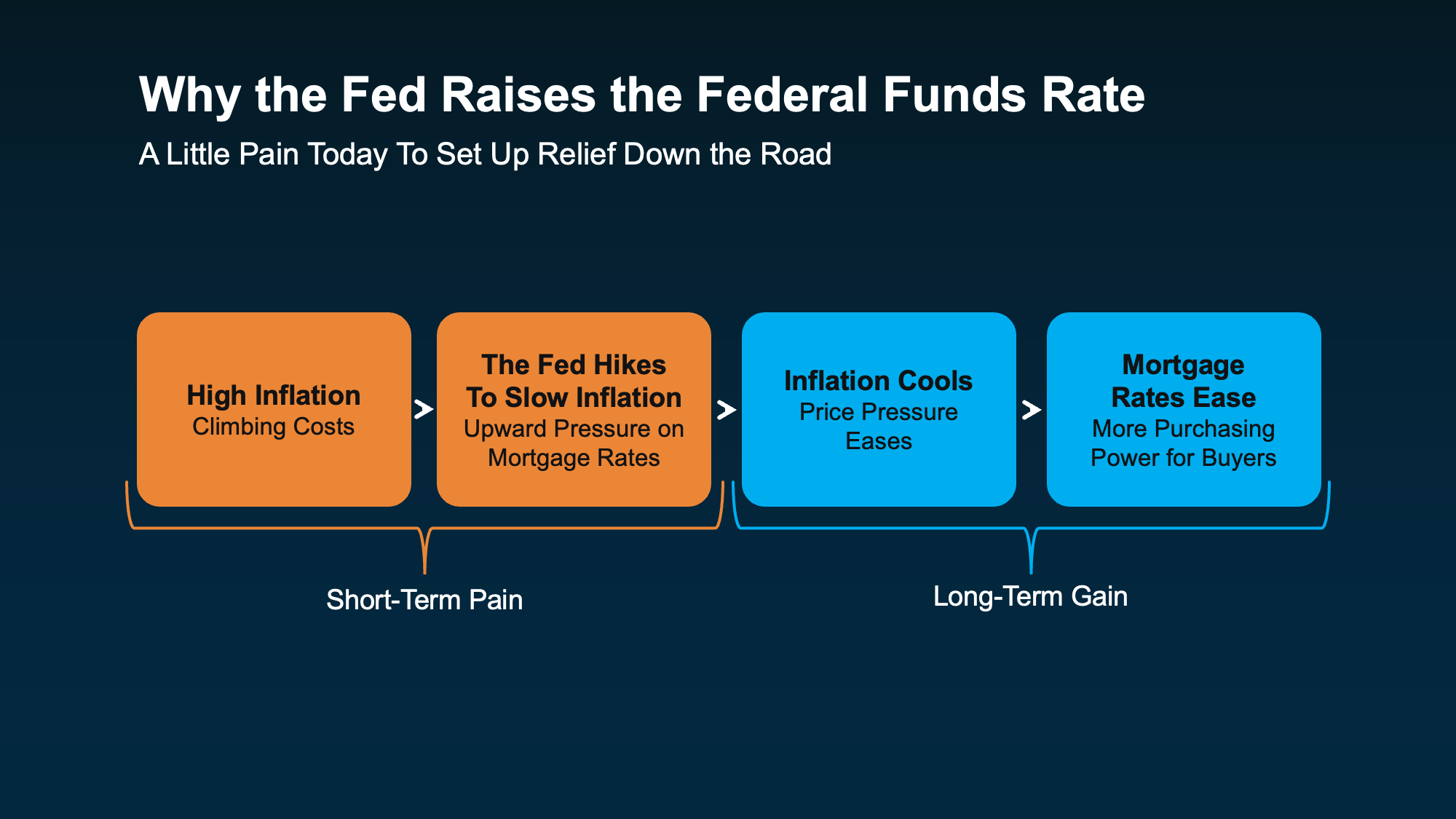
Think of it as short-term pain to set up relief down the road. But how long could that pain last? A lot depends on what the Fed does next.
There’s a Strong Possibility the Fed Will Hike Again This Year
According to CME FedWatch, there’s over an 80% chance the Fed hikes the Federal Funds Rate at least once more before the end of 2026.
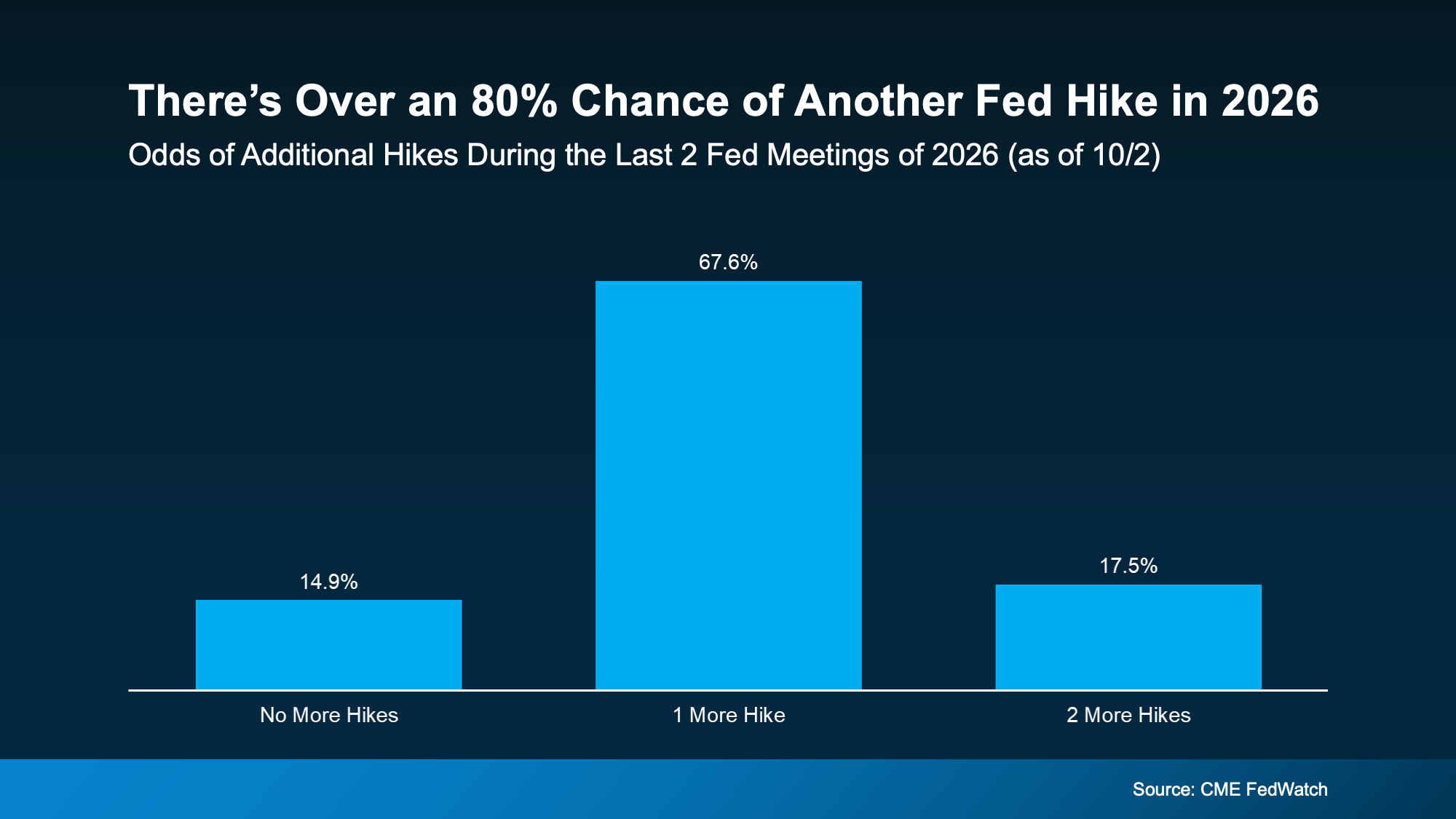
Remember, the Fed doesn’t set mortgage rates. But another hike will likely keep upward pressure on them in the short term. So should you wait it out?
Sam Williamson, Senior Economist at First American, says this:
“Over time, firmer Fed action could help steady the bond market and open the door to lower mortgage rates, but only if investors become more confident that inflation is coming under control.”
There are early signs that’s starting to happen. Inflation cooled faster than experts expected in August:
-
PCE inflation dropped to 3.4%, down from 3.7% in July.
-
Core PCE, the Fed’s preferred measure, fell to 3%, down from 3.3%.
That’s a step in the right direction. It’s part of why the odds of a hike at the Fed’s October meeting have come down recently. But inflation is still above the Fed’s 2% target. It’s been that way for about five years. Lower rates could still take a while.
Your best bet is a plan that works at today’s rates.
How To Make Your Move Work Right Now
This rate hike cycle isn’t the headline you want to see. But it doesn’t mean you have to wait. There are still ways to move, even now.
If You’re Buying
Get pre-approved so you know your real budget. Pre-approval clarifies what you can borrow at current rates, not what you wish rates were.
Ask your lender about your options to get the best rate possible. Different lenders quote different rates. Shopping around can save you thousands over the life of the loan.
Once you’re under contract, lock your rate. If rates jump before closing, a lock protects your payment from increasing.
If You’re Selling
Decide what matters most to you: a quick sale or top dollar. Each one can call for a different plan.
Price for today’s buyers, whose budgets are smaller with higher rates. Overpricing in this environment means longer days on market and eventual price cuts anyway.
Think about offering a rate buydown or other concession. A seller-paid rate buydown can lower the buyer’s monthly payment more than a price cut of the same dollar amount. That can be the difference between an offer and a pass.
Bottom Line
The Fed doesn’t set mortgage rates, but its hikes can keep them higher for a while. The goal is to bring inflation down over time. And eventually, that should bring rates down, too. With more hikes likely this year, waiting may not pay off.
If you want to talk through what this means for your situation, schedule a quick call and we’ll walk through it together.
For the full picture in your county, see our county market reports for Camden, Burlington, Gloucester, Salem, and Cumberland counties.